


Description
Introduction
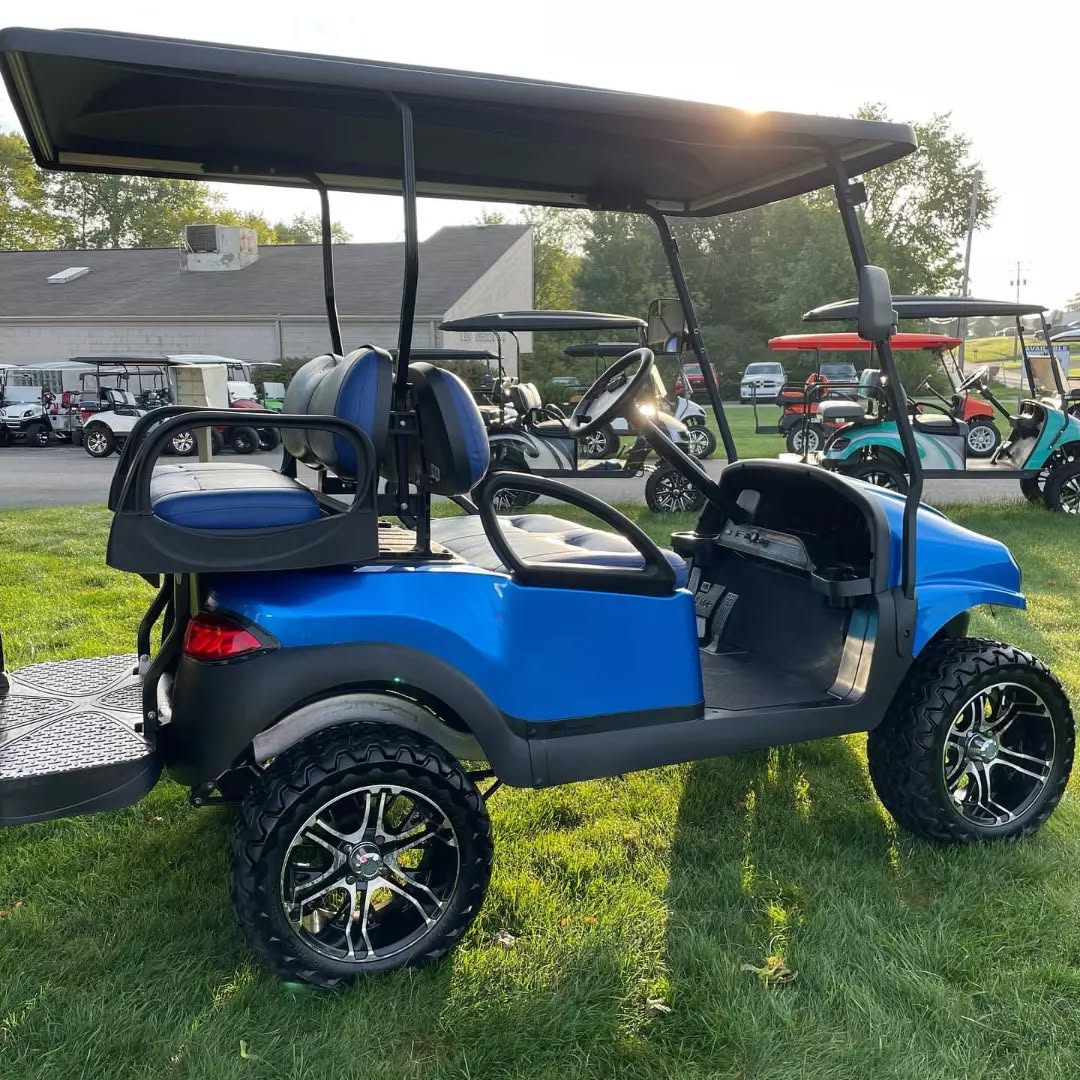
club car precedent phantom body kit gasoline model represents the zenith of this philosophy a mature, highly refined machine that blends proven engineering with exceptional durability. It is not merely a golf cart; it is a versatile utility vehicle, a hospitality shuttle, and a recreational toy, all built around a core of relentless reliability.
This deep dive explores every facet of the 2017 gasoline Precedent, from its chassis and powertrain to its real-world applications and enduring legacy, explaining why it remains a highly sought-after model on the used market years after it rolled off the production line.
club car precedent phantom body kit: Understanding the Platform
To appreciate the 2017 model, one must first understand the Precedent platform itself. Introduced in 2004, the Precedent was Club Car’s answer to the evolving market, which demanded more than just a basic vehicle to ferry golfers between holes. It was designed to be more stylish, more comfortable, and more durable than its predecessor, the DS model, which had enjoyed a legendary 20-year production run.
The Precedent brought several key innovations:
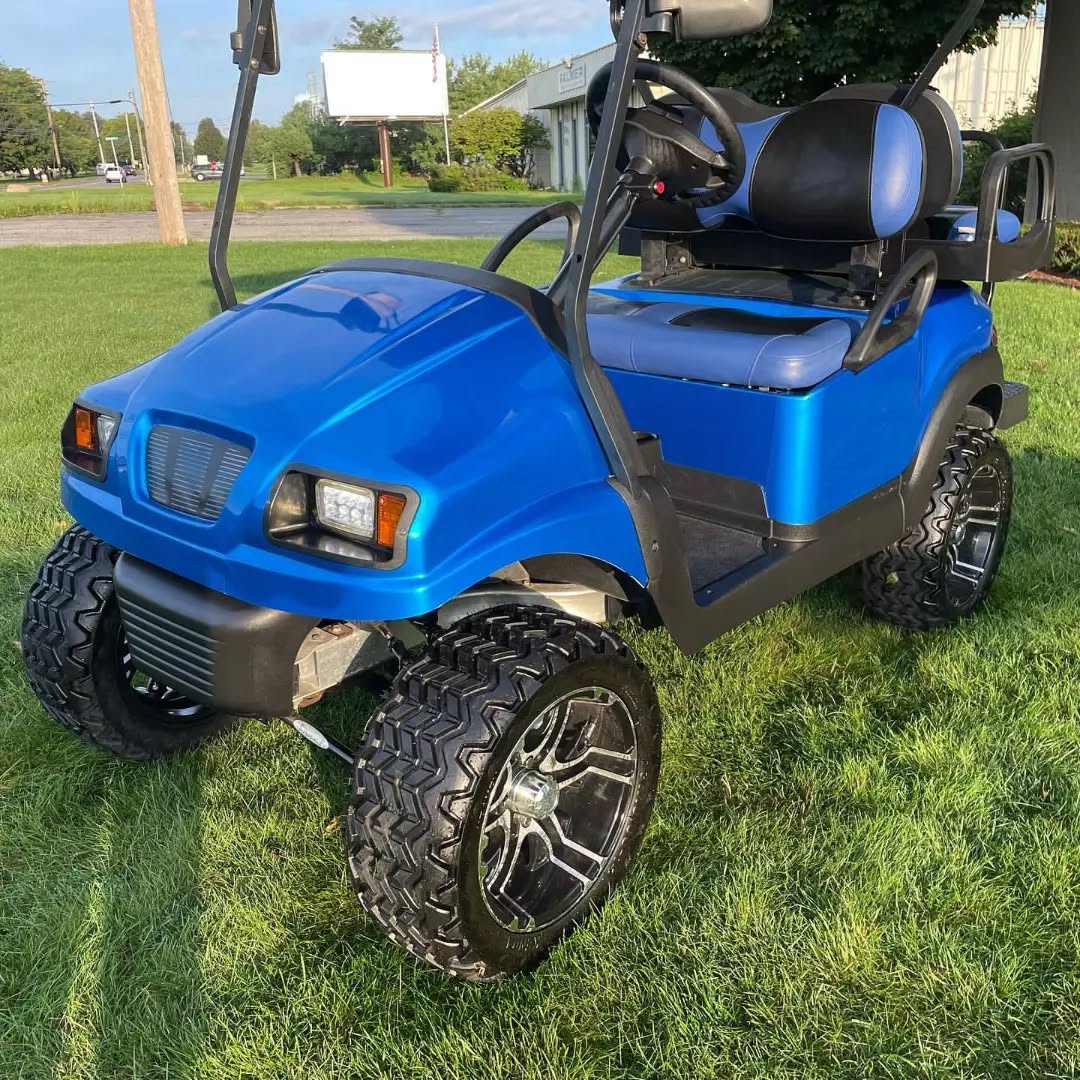
Aesthetics and Structure: It featured a one-piece, thermoplastic body that was more resistant to dents, cracks, and corrosion than traditional fiberglass or metal. Its design was sleeker, with integrated headlights and a more automotive feel.
The ERIC Charger (for electric models): This built-in computer system revolutionized charging for electric variants, but it signaled Club Car’s broader commitment to integrated, smart technology.
The Aluminum Frame: Perhaps its most significant feature. Unlike competitors who used steel, Club Car constructed the Precedent’s frame from 100% aluminum, making it completely rust-proof and incredibly light, which directly benefits performance and longevity.
By 2017, the Precedent platform had been in production for over a decade. Any initial teething problems were long since solved, and the model represented a state of perfected, mature design. The 2017 gasoline Precedent was the beneficiary of this extensive refinement.
club car precedent phantom body kit: The Kawasaki FE350 Engine
The defining characteristic of the gasoline Precedent is its engine. While many might assume a golf cart uses a simple, low-power industrial motor, the reality is far more impressive. The 2017 model is powered by a Kawasaki FH401D unit, more commonly referred to by its family name, the FE350.
This 4-stroke, single-cylinder, air-cooled engine has a displacement of 349cc. It’s a powerhouse in the small engine world, renowned for its:
Robustness: Kawasaki engines are legendary for their build quality and ability to withstand years of hard use with minimal maintenance.
Power Output: It produces approximately 11.5 horsepower, which provides ample torque for climbing hills, carrying heavy loads, and maintaining speed even with multiple passengers.
Simplicity and Serviceability: Its air-cooled design eliminates complex radiators, hoses, and water pumps. Its single-cylinder layout makes it straightforward to work on, and parts are widely available.
Fuel System: The 2017 model utilizes a sophisticated Mikuni® carburetor with a solenoid. This isn’t the simple carburetor of lawnmowers past. The solenoid helps ensure a clean shutdown and prevents backfiring, a common issue with older carbureted engines. It is designed to run efficiently and cleanly, meeting the emissions standards of its time.
The engine is paired with a Governor System that limits the top speed to around 12-15 mph in its stock configuration for golf course use. However, this system is famously easy to adjust, and a vast aftermarket exists to de-restrict these carts for higher speeds, often reaching 20-25 mph with simple modifications.
club car precedent phantom body kit: Transaxle and Clutch System
Power from the Kawasaki engine is transmitted to the rear wheels through a continuously variable transmission (CVT) system, a hallmark of utility vehicle design that provides smooth, automatic operation without the need for a traditional gearbox.
The system consists of two key components:
Drive Clutch (Primary): Attached directly to the engine crankshaft. It is a centrifugal clutch with weighted arms. At low engine RPMs, the clutch is disengaged. As the throttle is pressed and engine speed increases, the centrifugal force pushes the weights outward, forcing the clutch sheaves to close and engage the drive belt.
Driven Clutch (Secondary): Attached to the input shaft of the transaxle. It performs the opposite function. At rest, it is closed, and as the drive belt begins to turn and apply torque, it forces the sheaves of the driven clutch to open, effectively changing the “gear ratio.”
This elegant system provides infinite variability between its low and high ratios. From a standstill, the ratio is very low, offering maximum torque to get the vehicle moving. As speed builds, the ratio changes seamlessly to a higher “gear,” allowing for efficient cruising at higher RPMs. The 2017 Precedent uses a GM94 transaxle, a robust unit known for its durability and containing a mechanical reverse gear (activated by a lever on the transaxle case) and a differential.
Chassis, Suspension, and Braking: Built for the Long Haul
The 2017 Precedent’s chassis is its backbone—literally. The full-aluminum, rust-proof frame is the single greatest contributor to the vehicle’s legendary longevity. It will not rust, even in coastal salt-air environments or areas with harsh winters, a common failure point for steel-framed competitors.
The suspension is a simple yet effective double-wishbone design with leaf springs at the rear. This setup provides a surprisingly comfortable ride, capable of absorbing bumps on the golf course while also being stout enough for light-duty utility work. Coil-over shock absorbers at all four corners help control motion and dampen impacts.
Braking is handled by a four-wheel, mechanical drum brake system. While not as powerful or low-maintenance as modern disc brakes, the drum system is entirely adequate for the vehicle’s intended speeds and loads. It is operated by a pedal that uses a cable to actuate the brakes mechanically. The parking brake is a hand-operated lever that engages a separate set of shoes inside the rear transaxle.
club car precedent phantom body kit: Design, Comfort, and Usability
The 2017 Precedent was designed with both the operator and the fleet manager in mind.
Exterior:
The one-piece thermoplastic body is durable and color-fast (the pigment is molded throughout, so scratches are less noticeable).
It features integrated headlights and taillights (often optional but very common).
The classic Club Car front end with a prominent bumper and a diamond-plate floorboard is both stylish and functional.
The rear body is easily removed with a few screws, providing unparalleled access to the engine compartment and transaxle for maintenance—a feature highly prized by mechanics.
Interior:
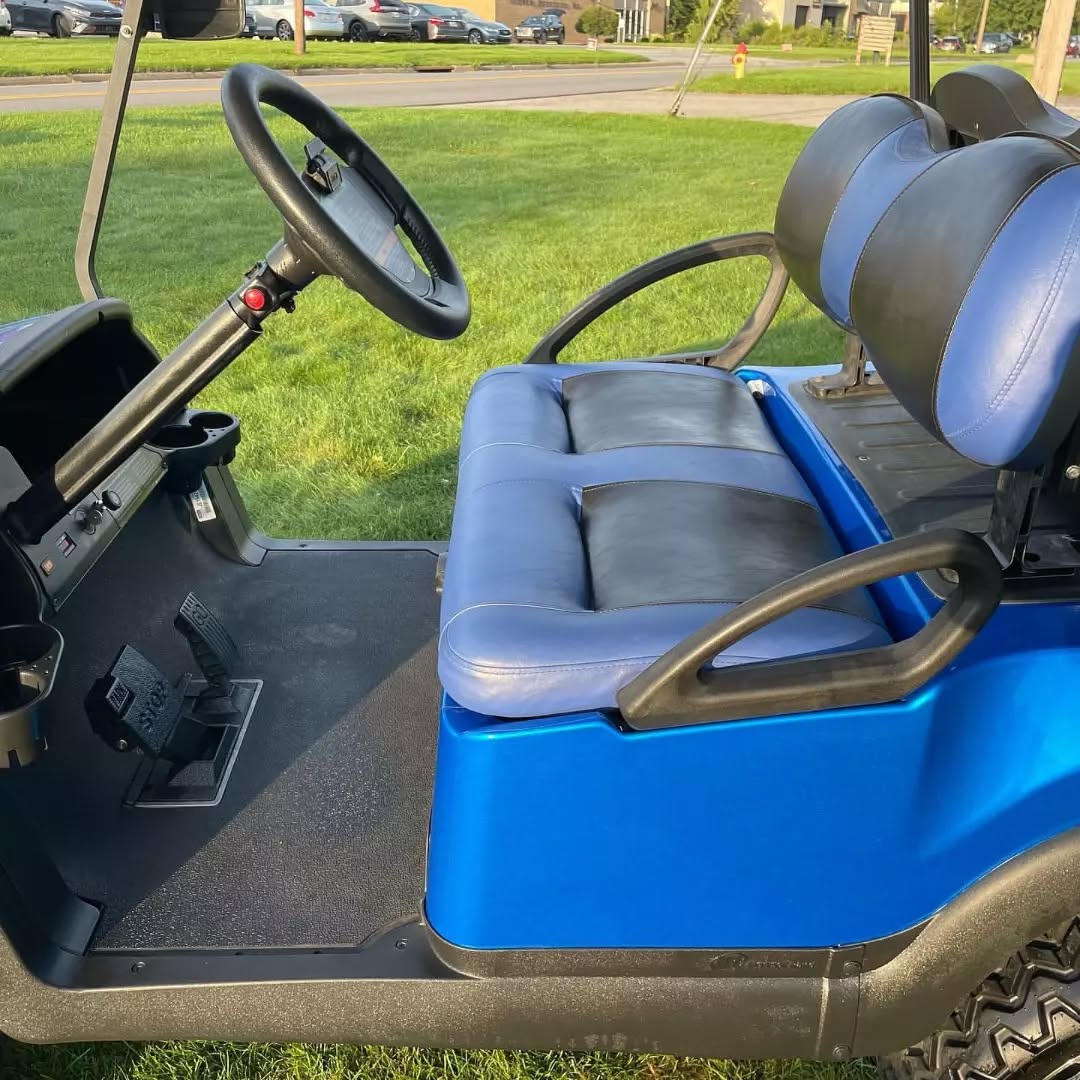
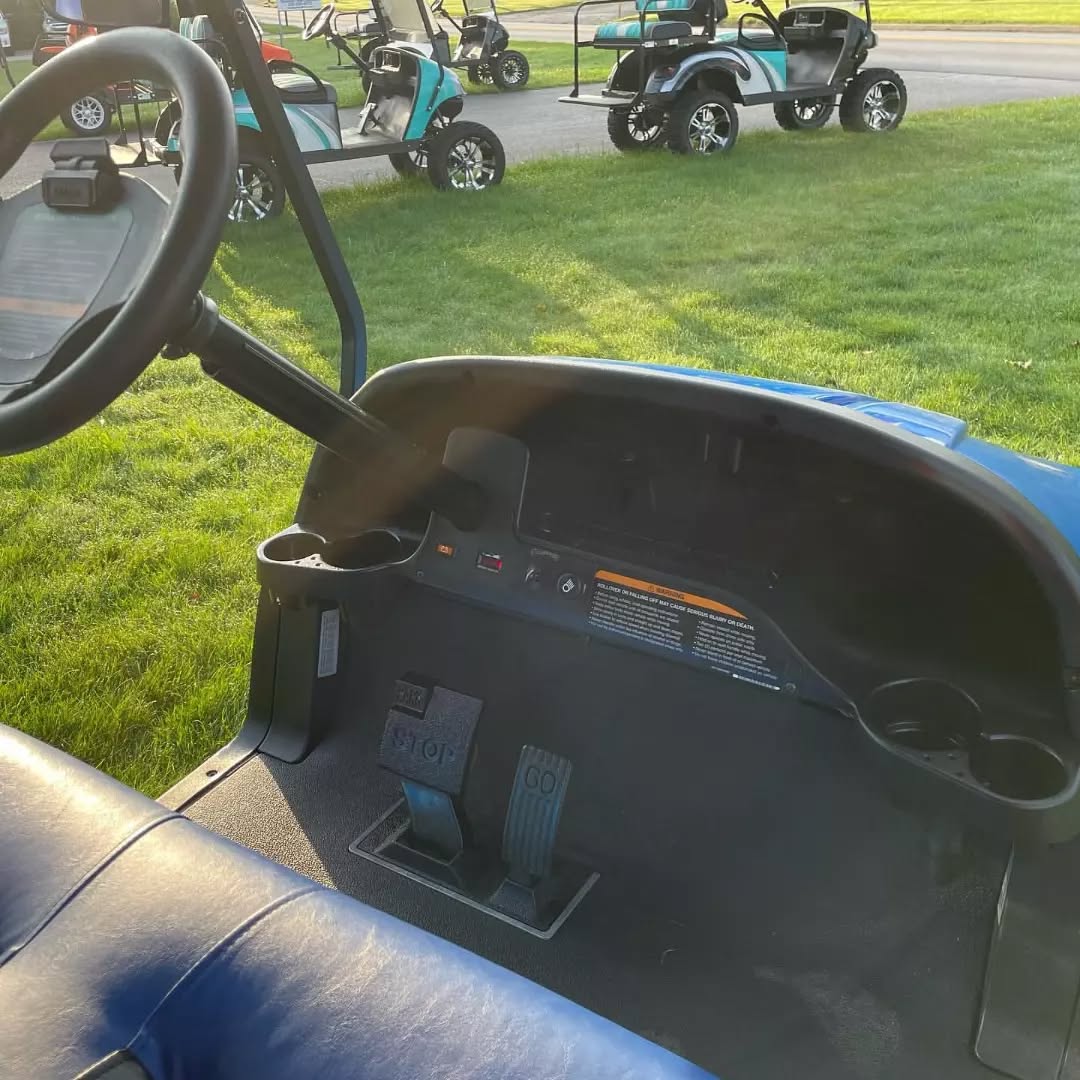
The dashboard is clean and simple. The key switch, forward/reverse shifter (a lever next to the driver’s knee), and fuel gauge are centrally located.
The most common shifter is a mechanical lever that physically moves the F-N-R mechanism on the transaxle. Some higher-spec models might have an electronic switch that controls a solenoid, but the mechanical system is beloved for its utter simplicity and reliability.
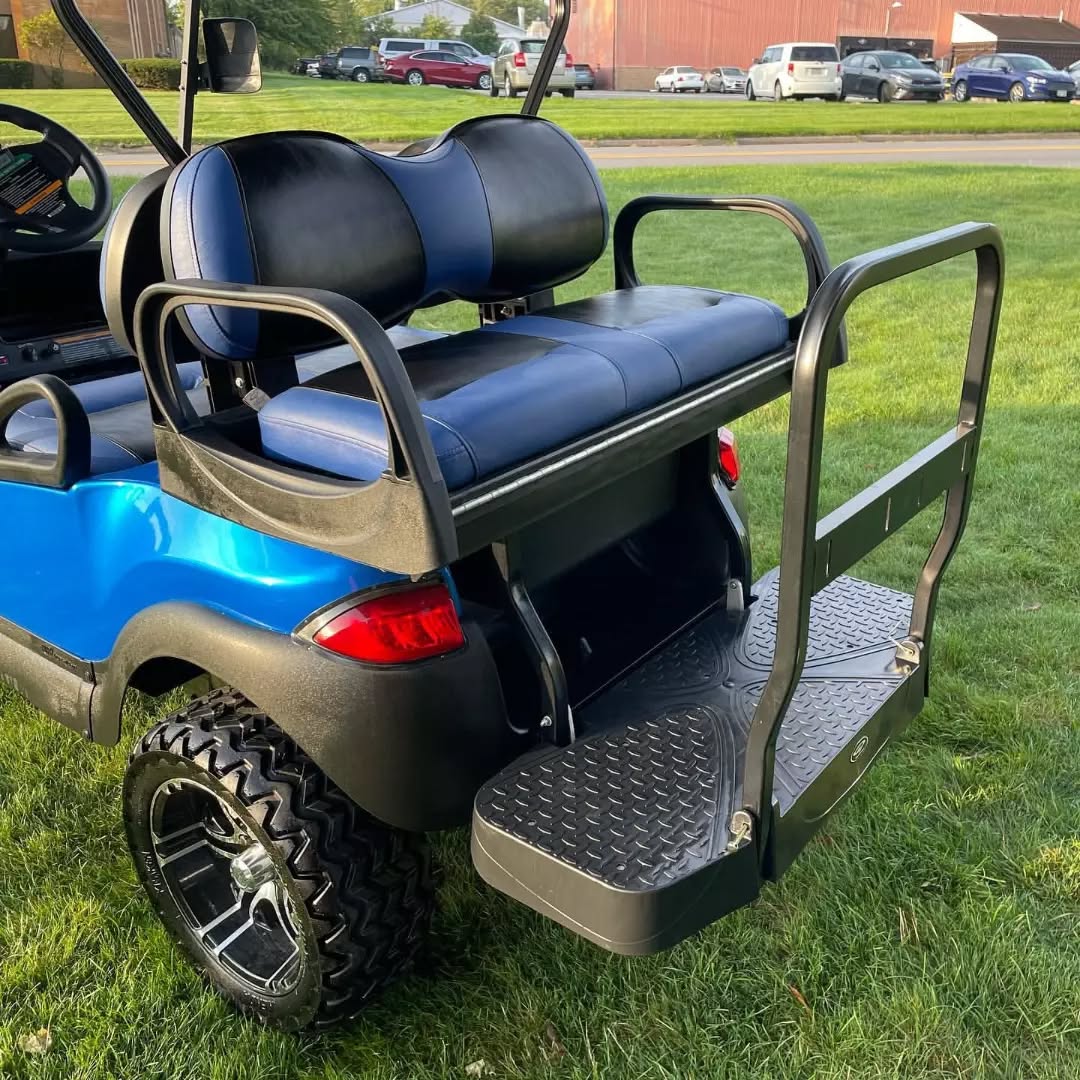
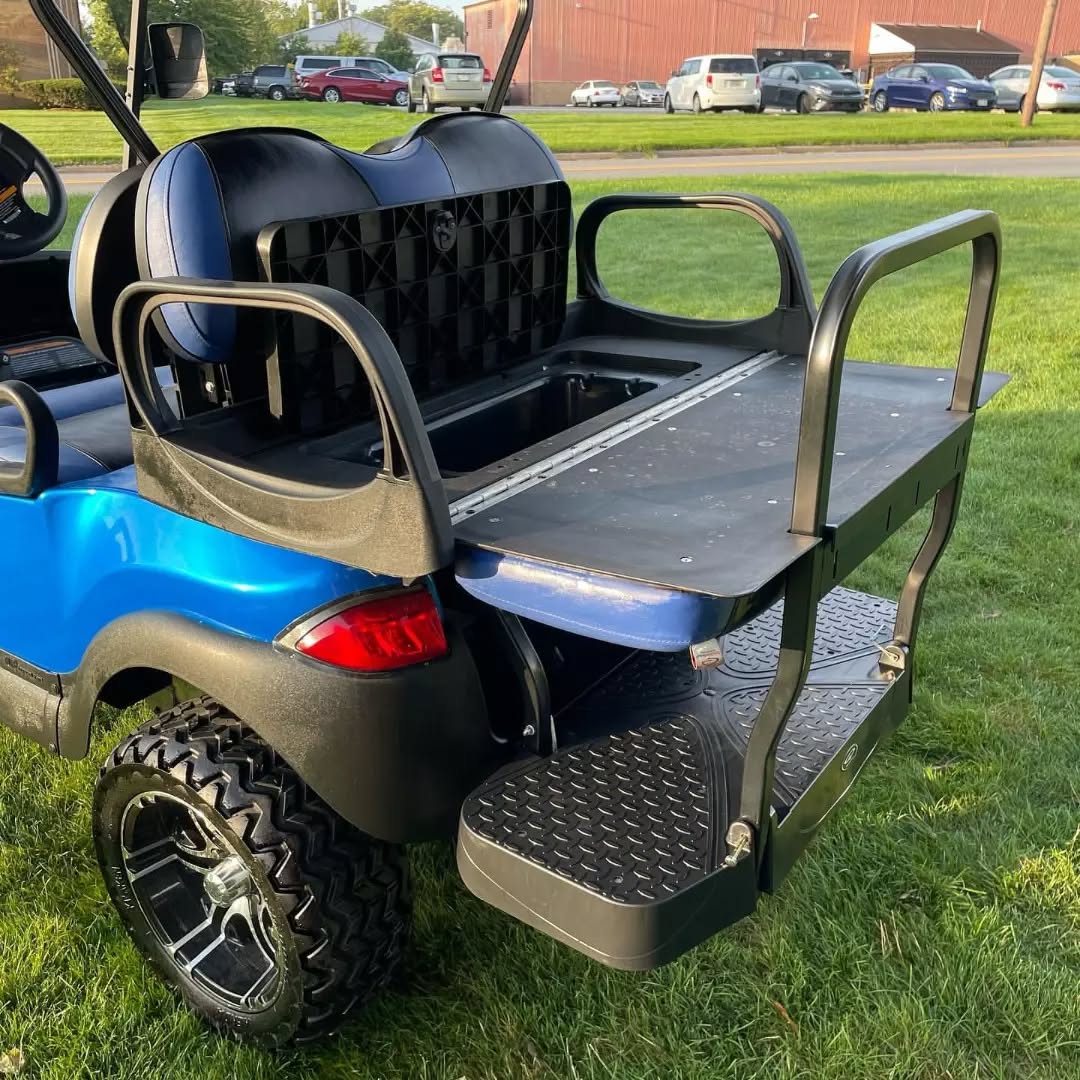
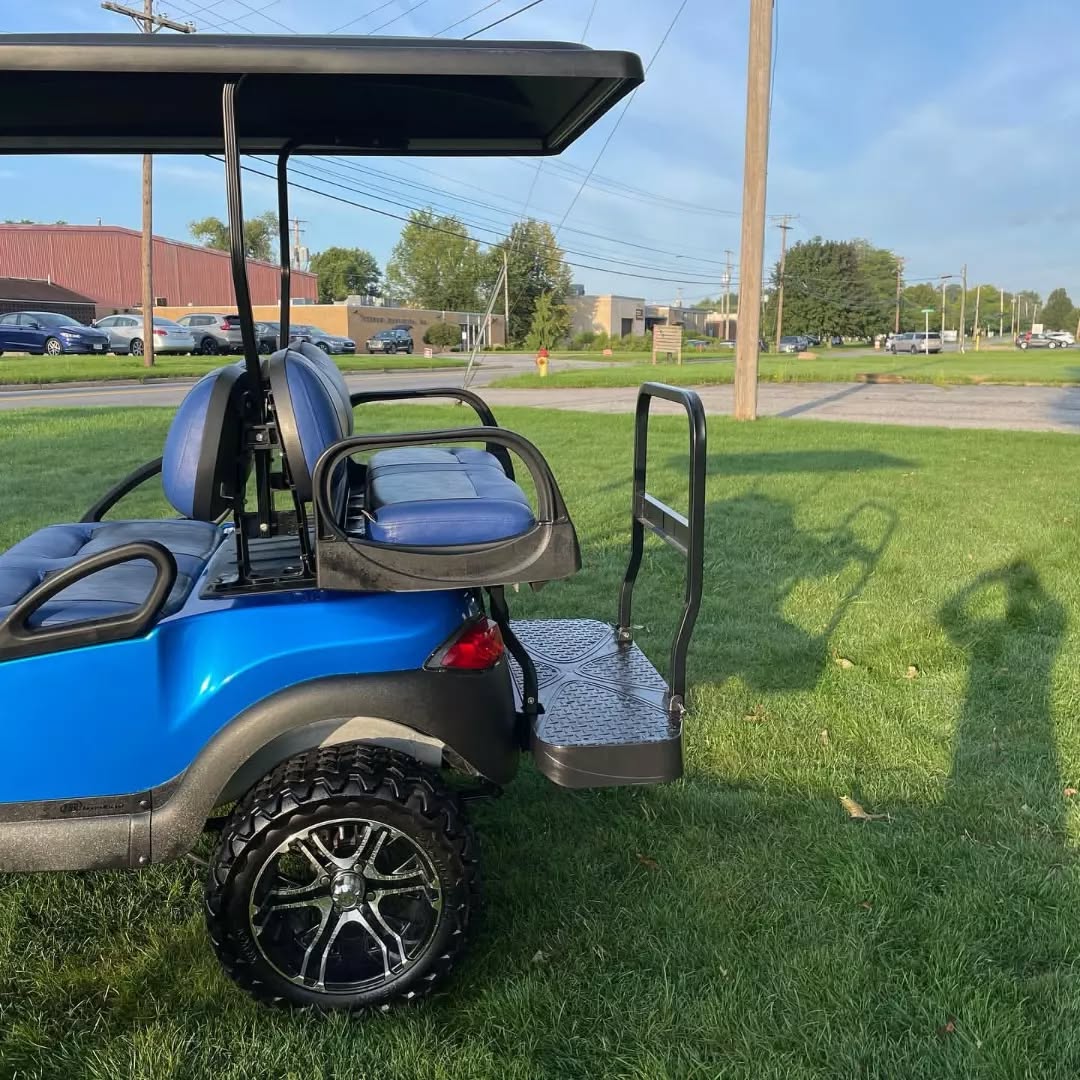
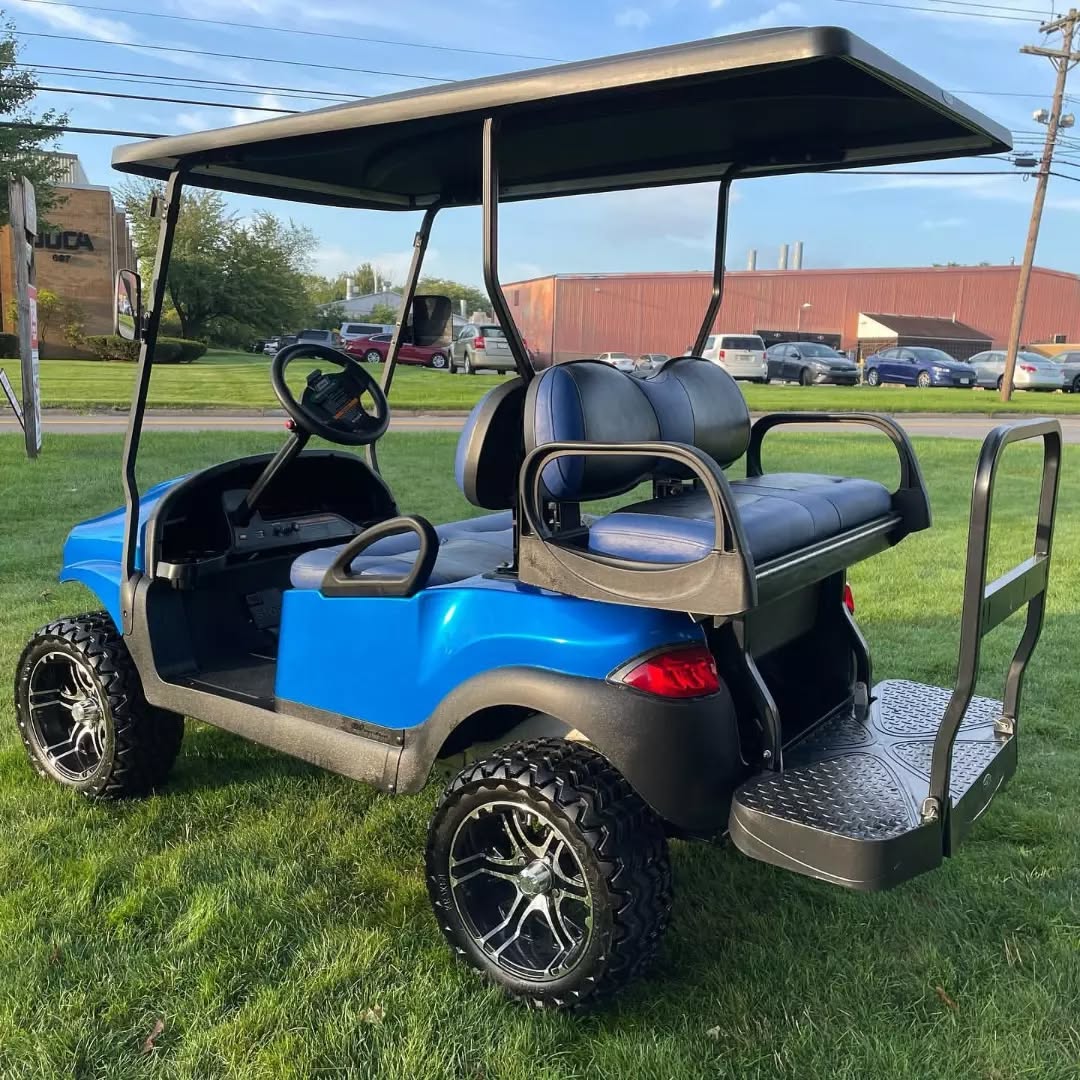
Seating is typically for four adults (two front, two rear) with vinyl upholstery designed to withstand the elements. The seats are comfortable and offer good support.
Ample legroom and a spacious feel make it comfortable for long periods of use.
The “Gas” Advantage: Operational Pros and Cons
Choosing a gasoline Precedent over an electric one is a significant decision with clear trade-offs.
Advantages:
Unlimited Range: You are limited only by the size of your fuel tank (approx. 3.5 gallons). You can drive all day, refill in minutes, and drive all day again. This is its killer feature for large properties, resorts, or anyone who doesn’t want to plan around charging.
Consistent Power: Performance does not diminish as the “charge” depletes. Power output and top speed are consistent from a full tank to an empty one.
Less Sensitive to Weight and Terrain: While weight and hills affect any vehicle, a gas cart is far less impacted than an electric one, which can see its range halved by hilly terrain or heavy loads.
Lower Initial Cost (Typically): In both new and used markets, gasoline models often command a slightly lower price than their equivalent electric counterparts.
Ideal for Cold Weather: Liquid fuel is not affected by cold temperatures the way battery chemistry is, which can significantly reduce the range and performance of electric carts.
club car precedent phantom body kit: Versatility and Applications
The 2017 Precedent Gas is a true multi-tool. Its applications extend far beyond the 18th hole:
Golf Courses: Its primary role, where its durability and ability to run all day without a charge make it a fleet manager’s dream.
Gated Communities and Resorts: As a shuttle for guests, maintenance, and security, its range and reliability are paramount.
Hunting and Properties: With a lift kit, off-road tires, and a cargo bed, it becomes a capable and quiet (compared to a UTV) utility vehicle for managing large tracts of land.
Airports and Industrial Complexes: For ground crew and maintenance personnel needing to cover vast areas quickly.
Personal Recreation: Many owners use them as neighborhood runabouts, for tailgating, or for cruising around lakefront properties. Its simple modifiability makes it a popular platform for customization.
Drivetrain: Test drive it. It should accelerate smoothly without belt squeal or jerking. The clutch engagement should be predictable. Listen for whining from the transaxle.
Common Issues: Look for worn bushings in the front suspension, worn brake cables, and a fuel gauge that doesn’t work (a common issue with the sending unit in the tank).
Given Club Car’s build quality, a 2017 model with moderate use is barely broken in and has decades of life left in it.
Conclusion:
The 2017 Club Car Precedent Gasoline stands as a testament to a different engineering philosophy—one prioritizing mechanical simplicity, operational independence, and brute-force durability over silence and absolute low maintenance. It is a machine built without compromise for a specific purpose: to work, without fail, day in and day out.


Reviews
There are no reviews yet.